

Creative Chats
and getting over my fear of public speaking (sort of)

Years ago, I told my boss (multiple bosses actually) that if they made me do a public speaking course to present in front of people I would quit. I never took jobs where this was required anyway, so how did this keep happening? I was usually a role below those who would speak at events or present, probably a role below that one too, and yet somehow, it always came up. I look back now and remember a few of my employers quite sincere in something they saw in me, “really, I think you should face your fear because you would be great at it”, but I had made up my mind. I had a real fear that others just couldn’t understand. I don’t even know where it came from? But when I stood up infront of people it felt palpable. I was the awkward kid who was on the school debating team, who did lounge dance performances in front of my parents (and their friends) regularly…. And I loved it! But somewhere along the way fear took place with my confidence and employers were able to sniff that out.
I kept telling myself the same story, ‘you can’t, you can’t, you can’t’. I didn’t even make a speech at my own wedding (which I regret). The moment things would fall silent and lots of eyes looked expectantly at me I would get shaky, short of breath and forget everything. Why on earth would I WANT to do that? Why push through?
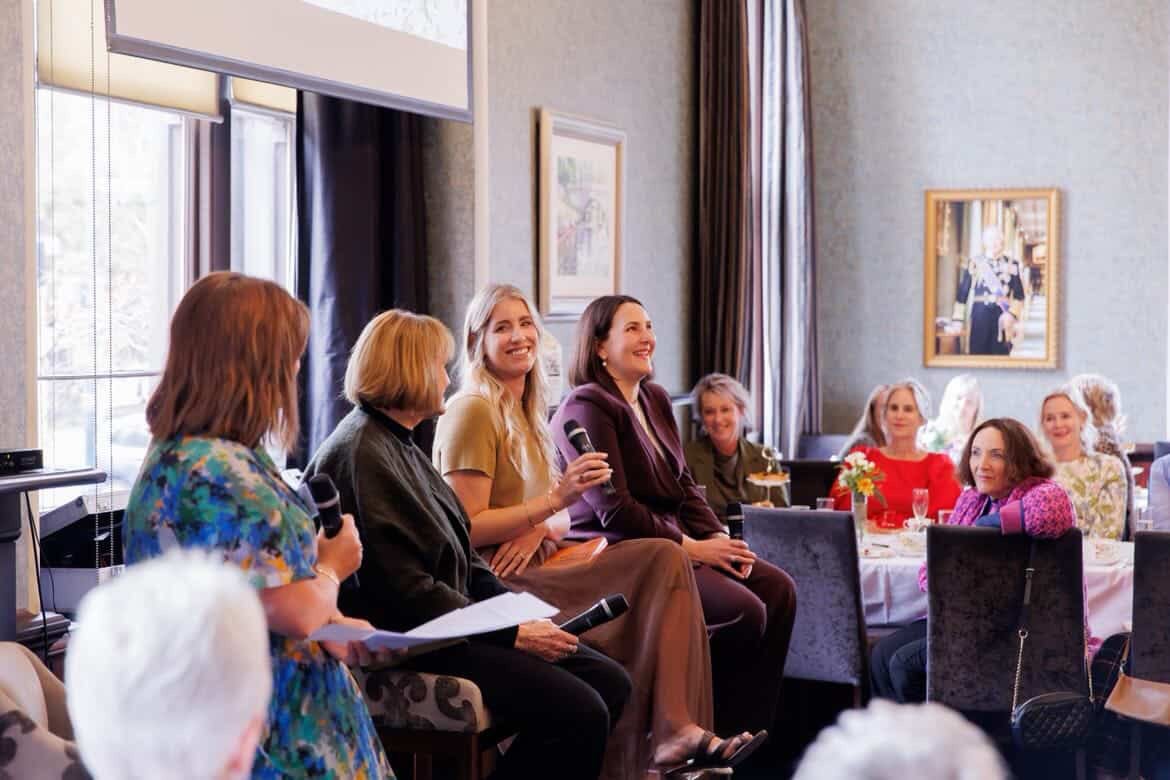
WELL… fast forward many years and 3 children later, I have been on radio multiple times, live television for an interview, and this week I hosted a creative seminar for 25 people in Australia and spoke at a charity event on a panel in front of 100 people. Am I the same person? Yes and No. When I began my journey as an author I thought it was perfect! As an introvert (or textrovert) I was able to reach people with what I wanted to say without having to physically show up anywhere. But over the years this began to change. There were book launch events, speaking events, seminars, podcasts… it was sort of expected I do these things. Obviously the choise is ultimately mine, but I began to shift my thinking from ‘I can’t’ to ‘I can and I will’. Because it was a huge compliment, and because I felt so passionate about what I was speaking on that eventually the fear of staying silent became bigger than the fear of being seen.
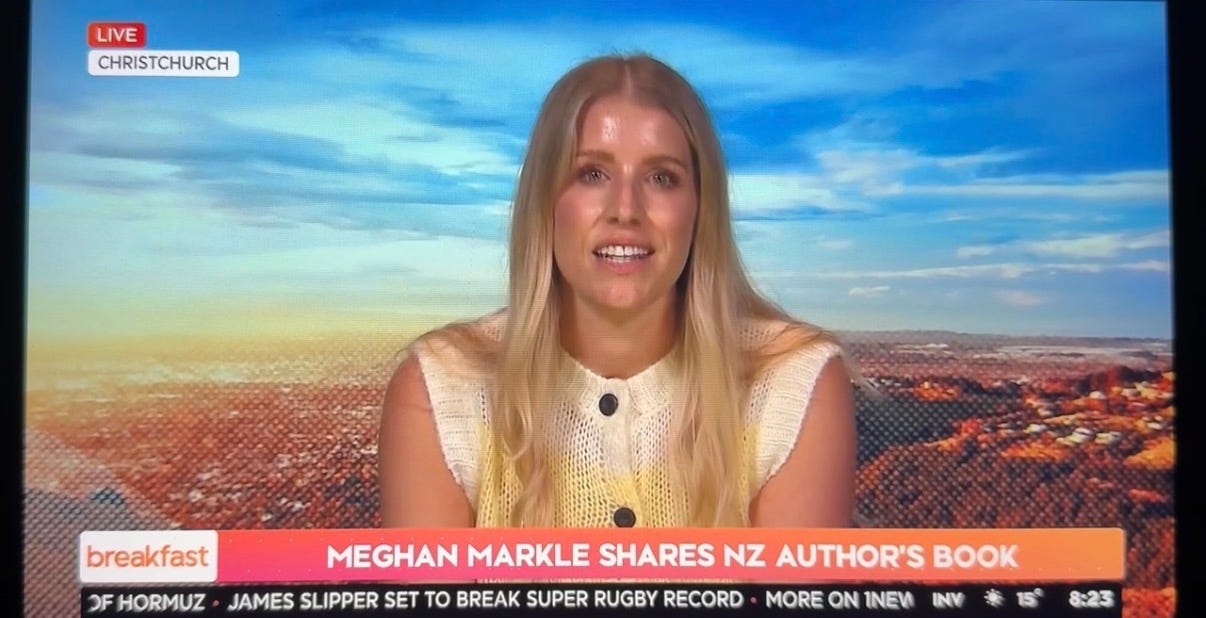
I was able to gently tip toe into my fear in the begnning (far before being launched into live TV), which made it that much easier because it felt like practice, and I could talk about what I knew with certainty and confidence. Once a question as simple as ‘tell me a little about yourself’ would have my heart racing, now I realise, it really isn’t as daunting as it seems. Showing up as myself used to scare me, and now I am asked to speak simply AS myself, and shouldn’t we all approach speaking this way? I am not discrediting the fear mind you, bedcause it CAN be scary - people feeling as if they know you to suddenly meet you is nerve wraking, what if you dissapoint them? What if you’re just one giant imposter? (it has taken a lot of work to move past this)… but I am pleased to say my breakthrough year has been this one.
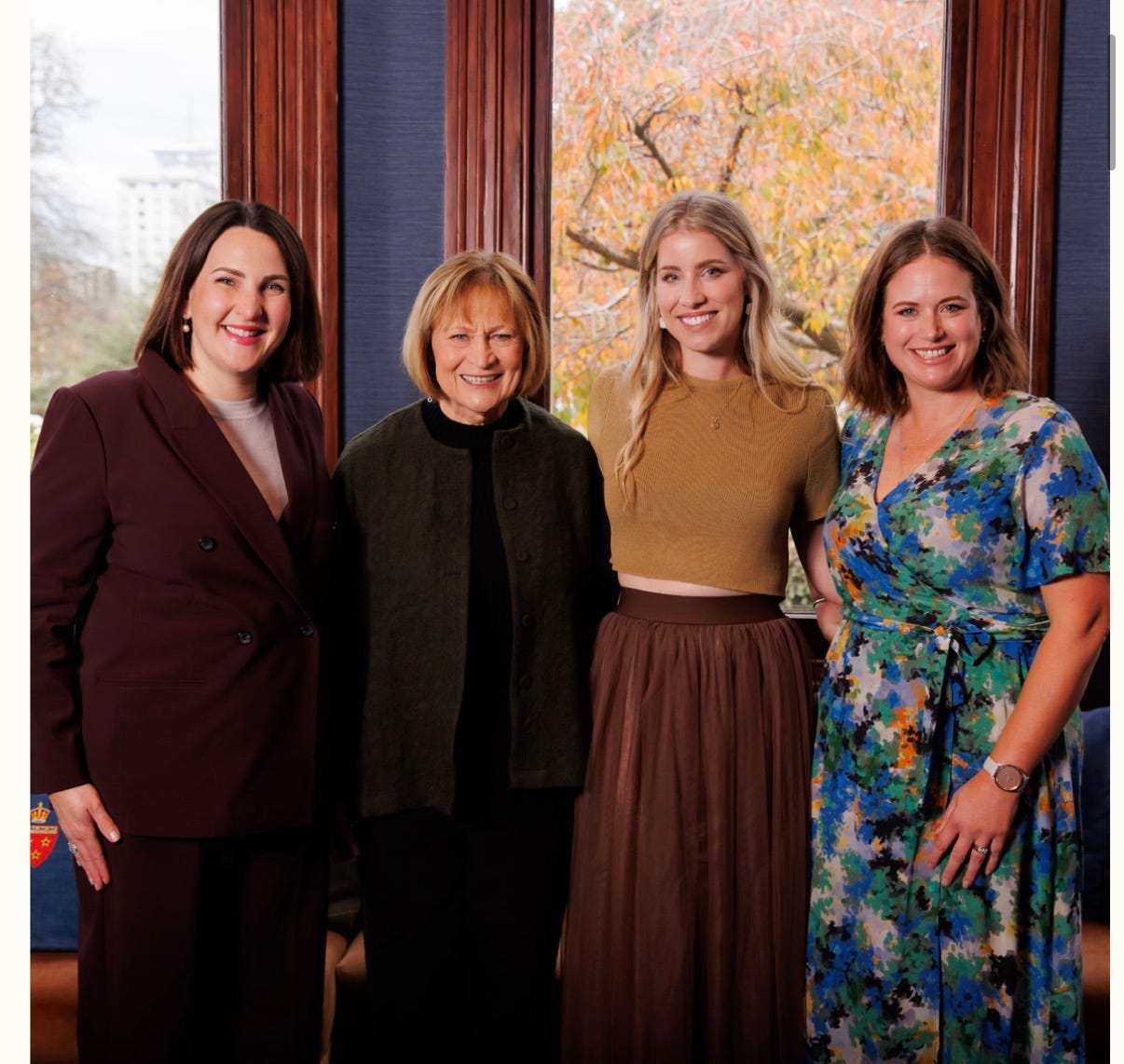
And as cliché as it sounds, the more I have got up at these events and said ‘yes’ the easier it has become. I don’t feel I will ever be a ‘natural public speaker’, nerves and self doubt still find me but I am always so incredibly glad I did it after the fact. Maybe knowing what I do now there is still time for that vow renewal for our 10 year wedding anniversary next year…
In light of these recent events, I thought I would share some of my answers to the Q&A I hosted for a creative agency (if you’re a writer yourself you may find some of this useful or will at least nod your head!)
The interview was about creativity, motherhood, writing, social media, neurodivergence, and the sometime strange and always sacred experience of turning something deeply personal into poetry.
Afterwards, I realised the answers I gave were less about writing itself, and more about why we create at all. So much of what I said circled back to the same thing: trying to make sense of ourselves while we are living in the thick of becoming.
How did your writing journey begin?
I started writing as eatly as I could hold a pen, poetry found me in primary school years, but I started writing seriously after postpartum. At the time, I don’t think I was consciously trying to “be” a writer. I think I was trying to survive my own mind. Writing became a place to put things I couldn’t carry internally anymore. A release. A way of making sense of emotions that often arrived all at once and without language. And then, unexpectedly, that release became connection.
There is something disarming about writing honestly and discovering someone else is holding the same feeling. I still think that’s the most powerful part of creativity, not being seen necessarily, but making other people feel seen, often the two go hand in hand. I also think I was searching for my own kind of village (being the first of my friends to have a baby at the time).
Your writing about motherhood is so personal. When you sit down to write, are you thinking about your audience, or is it more of a personal release first?
My writing is personal because I don’t really know how to write any other way. Even commissioned pieces end up pulling from somewhere real. I can usually tell when something has only been written from the head and not from the heart. Readers can feel that too.
At the same time, sharing online complicates things. Once your creativity becomes attached to an audience, or a “brand,” there is an awareness on what you create and whether it fits the niche. Sometimes it’s supportive, sometimes it’s a fear of being misunderstood, or just trusting that as your creative journey takes different routes, your audience is growing with you too.
I think that’s the difficult part of being niched online. People arrive for one version of you and sometimes resist when you expand beyond it, but I also don’t think that should ever be a barrier to creative growth. It can be hard though, and I don’t hear many creators talk about this.
Still, everything I write begins with me trying to say something true, it always stems from a feeling, it’s always FROM something.
You were diagnosed with ADHD and OCD later in life. How has that understanding shaped your creative process - how do you work with it rather than against it?
Being diagnosed later in life with ADHD and OCD gave me context for the way my mind has always worked creatively. Although honestly, I don’t spend much time trying to work against it anymore. I think over the years I’ve accidentally built a process around the way my brain already moves.
I have thousands of notes in my phone. Tiny fragments. Single lines. Openings with nowhere to go. Sometimes I revisit them. Sometimes it’s just a poetry grave, either way I’m getting the ideas out.
I also know now that I write best one piece at a time. If I overwork something, it loses its pulse and soul. The best writing usually arrives pretty quickly for me, the less I edit the better it seems to resonate because it’s more raw.
What does your editing process look like? How do you know when something is “finished”?
Editing is less technical than emotional. I know something is finished when I feel it reading it back. When my breath catches slightly. When a line lands in me before I’ve even fully processed why.
I read almost everything aloud, usually to my husband, who has heard more poems than anyone reasonably should. But hearing the rhythm matters. Poetry lives in pauses as much as words. I pay attention to line breaks, double meanings, unnecessary explanations. I want the writing to reveal itself rather than announce itself.
Sometimes a whole piece is built around one line that feels alive enough to hold the weight of the rest of the piece.
Motherhood changed my creativity too. Not just because it gave me more to write about, but because it made creativity feel necessary. When you spend so much of yourself caring for others, you realise how important it is to still have a place where you can sit with yourself for a bit.
And yet, ironically, I can no longer write in chaos the way I once could. I used to write in the thick of everything, children climbing on me, dinner half cooked, exhuastion, (not full poems of course but a few bones of one). Now I mostly need quiet. Space. Fresh air. A change of scenery. Ebbs and flows in my writing but also how I approach it as time moves on.
I think creativity asks us to keep meeting ourselves where we are, instead of where we used to be. I don’t write about postpartum anymore because it feels like so long ago, I feel like I did those moments justice. Looking back on some older piecess those feelings hit me so sharply, but I couldn’t write them in such a piercing way now. This should also provide hope to those struggling with postpartum and in the thick of it right now, there is a light, there truly is.
What habits or rituals help you keep showing up creatively, even when you don’t feel inspired?
There’s a lot of advice about creating. Write every day. Don’t stop. Push through resistance. And maybe that works for some people. But I’ve learned forcing creativity drains the very thing I loved about it in the first place. My writing began as passion, catharsis, release. Turning it into constant output would make it feel too performative instead of honest.
Not writing feels bad too, though.
So maybe the balance is in staying close enough to your creative self that you can still hear it when it calls. I don’t have something profound to write about every day, and I don’t want my work to feel like ‘content’, even if I was only remembered for one or two pieces that really touched someone, I would be happier with that than endless likes and shares on what will perform for an algorithm.
Practical things that do help me though, is reading, listening to music, taking breaks and walks, (our brains aren’t computers but even they need a reboot at times), and I’ll say it again… reading!
Creativity has been the most wonderful outlet for me, yes it has turned into a job but the balance between the two is key, I don’t want to stop loving what I do, and I never want to forget why I began in the first place.
How do you see tools like AI fitting into your creative work?
I have complicated feelings about this (and I was also aware I was speaking to writers who often have to write for commercial briefs so AI may play a big part for them). But I told them to me, it feels like AI is cheating in the creative world. I think AI can absolutely help with ideas or editing, I understand it’s not going anywhere…. but I worry about what happens when we outsource too much of our imagination. Creativity is not just the finished piece. The process is the point. The wandering through, the frustration, discovery, doubt, the failed drafts, the terrible lines, the breakthroughs, THIS IS the creative life.
I think about how I would explain that to my children.
A mind needs feeding. Imagination needs using. If we stop reaching for our own thoughts because something faster can do it for us, eventually that part of us will become so much harder to access, or worse, lost.
Art is a human need to make something from the noise inside us, how can AI ever truly replicate this? I see poems and books written by AI (far too often) and it’s pretty obvious to the trained eye, but also, many don’t seem to mind. Authors work is ripped off left right and centre (mine included). I told them not to fall into the AI trap, who knows if they’ll listen. The world is moving forward in ways that feel so backward.
Do you treat social media as part of your creative process, or as a separate step, and how do you decide what’s worth sharing?
Social media feels separate from my actual creative process.
I share poems when I feel I have something to say, but sometimes I write just for myself. It may become something worth sharing later, but not always.
There’s definitely a strategy side to social media now, almost “dressing poems for the grid.” I’ve learned what travels best on different platforms: reels on Facebook and Instagram, carousels, short video hooks on TikTok. But the writing itself still happens away from all of that. Social media is promoting my work sure, but I never write for socials. I trust the right audience will find the words they need and it’s always been that way around for me.
Congrats on overcoming your fear! I agree, reframing from "i can't" to "i will" is a gamechanger, while still hard.